


If you’re getting traffic but not seeing the sales, leads, or sign-ups you expected, you’re not alone. Many website owners focus heavily on driving visitors but overlook the most profitable lever of all: conversion rate optimization (CRO).
CRO is the art and science of turning more of your existing visitors into customers, subscribers, or leads—without spending more money on ads or traffic. Even a small improvement in conversion rates can dramatically increase revenue over time.
This ultimate CRO handbook will walk you step by step through proven strategies, frameworks, tools, and real-world tactics you can apply to blogs, affiliate sites, eCommerce stores, and service websites. Whether you’re just getting started or refining an existing funnel, this guide will help you unlock consistent, scalable growth.
What Is Conversion Rate Optimization (CRO)?
Conversion Rate Optimization is the process of improving your website so that a higher percentage of visitors complete a desired action. That action might be:
- Buying a product
- Joining your email list
- Clicking an affiliate link
- Booking a call
- Downloading a lead magnet
Your conversion rate is calculated as:
Conversions ÷ Total Visitors × 100
If 100 people visit your page and 3 sign up, your conversion rate is 3%.
CRO is not about tricks or manipulation—it’s about understanding user behavior, reducing friction, and guiding visitors toward value-driven decisions.
Why CRO Matters More Than Ever
Traffic is expensive. Competition is fierce. Attention spans are shrinking.
Here’s why CRO should be a top priority:
1. You Make More Money Without More Traffic
Improving a conversion rate from 2% to 4% instantly doubles revenue—without increasing ad spend or content production.
2. CRO Improves User Experience
Optimized sites are clearer, faster, and easier to use. Visitors win, and so do you.
3. CRO Compounds Over Time
Each improvement builds on the last, creating long-term gains rather than one-time wins.
4. CRO Makes Your Marketing Smarter
You stop guessing and start making decisions based on real data and behavior.
Understanding User Intent: The Foundation of CRO
Before changing headlines or button colors, you must understand why visitors came to your site.
User intent generally falls into three categories:
Informational Intent
Visitors want answers, tutorials, or education.
Example: “What is conversion rate optimization?”
Navigational Intent
Visitors are looking for a specific brand, product, or page.
Example: “Optimizely pricing”
Transactional Intent
Visitors are ready to buy or take action.
Example: “Best CRO tools for eCommerce”
Your CRO strategy must match the intent of the page. Trying to sell aggressively on informational content often backfires. Instead, guide users naturally to the next logical step.
The CRO Framework: A Proven Step-By-Step Process


Successful CRO follows a structured process:
- Analyze data
- Identify friction points
- Form hypotheses
- Test changes
- Measure results
- Scale what works
Let’s break this down.
Step 1: Analyze Your Website Data
Data reveals what users do, not what they say.
Key tools include:
- Google Analytics – Track traffic, bounce rates, time on page, and conversion paths
- Hotjar – Heatmaps, scroll tracking, and session recordings
- Microsoft Clarity – Free session recordings and insights
Focus on:
- Pages with high traffic but low conversions
- High bounce rate pages
- Drop-off points in funnels
These are your biggest opportunities.
Step 2: Identify Conversion Killers
Common CRO mistakes include:
Slow Page Speed
Every extra second of load time reduces conversions.
Fix: Compress images, use caching, and upgrade hosting.
Confusing Navigation
If visitors can’t find what they want, they leave.
Fix: Simplify menus and remove unnecessary options.
Weak Messaging
Unclear headlines fail to communicate value.
Fix: Answer “What’s in it for me?” immediately.
Too Many Choices
Choice overload leads to inaction.
Fix: One primary CTA per page.
Step 3: Craft High-Converting Headlines
Your headline is the most important element on the page.
Great headlines:
- Are clear, not clever
- Focus on outcomes, not features
- Speak directly to pain points
Weak headline:
“Welcome to Our Website”
Strong headline:
“Turn More Visitors Into Customers Without Increasing Traffic”
Use subheadlines to reinforce value and reduce uncertainty.
Step 4: Optimize Calls-to-Action (CTAs)


Your CTA should guide users effortlessly.
CTA Best Practices:
- Use action-oriented language (“Get,” “Start,” “Download”)
- Highlight benefits (“Get My Free Guide”)
- Use contrasting colors
- Place CTAs above the fold and throughout long pages
Bad CTA: “Submit”
Good CTA: “Get My Free CRO Checklist”
Step 5: Landing Page Optimization That Converts
Landing pages should do one thing only.
Key Elements of High-Converting Landing Pages:
- A clear headline
- A single focused offer
- Bullet points emphasizing benefits
- Social proof
- Minimal distractions
Remove navigation menus if possible. Every link is an exit opportunity.
Step 6: Build Trust With Social Proof
Trust removes hesitation.
Examples of effective social proof:
- Testimonials
- Reviews
- Case studies
- Subscriber counts
- Logos of brands you’ve worked with
Specific beats vague.
Weak: “Great service!”
Strong: “We increased conversions by 42% in 30 days.”
Step 7: Use A/B Testing to Remove Guesswork
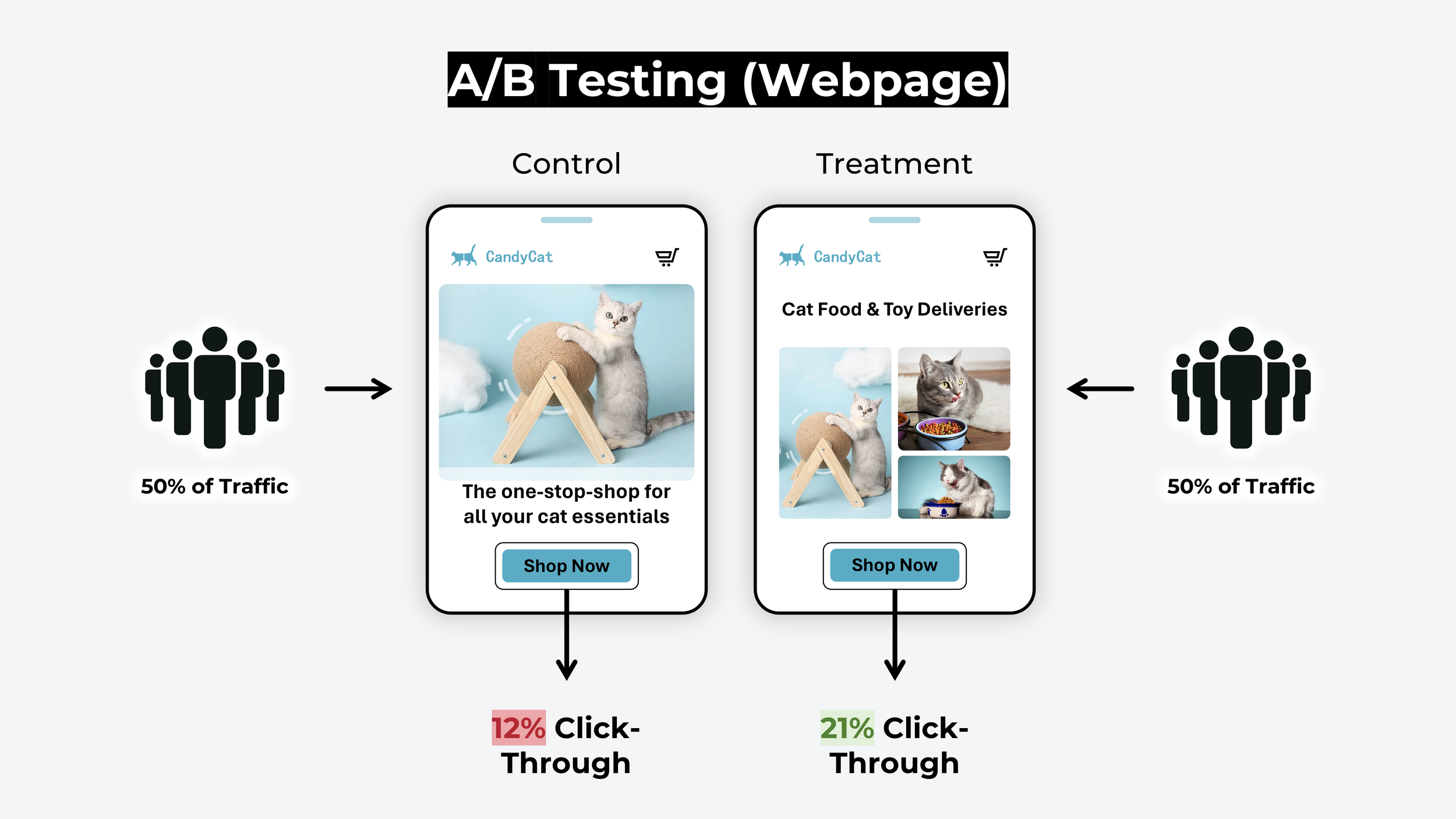


A/B testing compares two versions of a page to see which performs better.
Tools to consider:
- Optimizely
- VWO
Test one variable at a time:
- Headlines
- CTA text
- Button colors
- Page layout
Let data—not opinions—decide.
Step 8: Optimize Forms for Higher Completion Rates
Forms are friction points.
CRO Form Optimization Tips:
- Ask for only essential information
- Use inline validation
- Break long forms into steps
- Add privacy reassurance
Every field you remove increases completion rates.
Step 9: Mobile CRO Is Non-Negotiable
More than half of web traffic comes from mobile devices.
Mobile optimization tips:
- Large, tappable buttons
- Short paragraphs
- Fast load times
- Minimal pop-ups
Test your site on real devices—not just emulators.
Step 10: Personalization & Segmentation
Modern CRO isn’t one-size-fits-all.
Personalization examples:
- Showing different CTAs to new vs returning visitors
- Tailoring offers by traffic source
- Adjusting messaging based on behavior
Even basic personalization can significantly boost conversions.
CRO for Blogs and Affiliate Websites
CRO isn’t just for eCommerce.
Blog CRO Strategies:
- Content upgrades
- Inline CTAs
- Exit-intent offers
- Strategic affiliate link placement
Focus on contextual relevance, not aggressive selling.
Common CRO Myths (That Cost You Money)
- ❌ “More traffic fixes everything”
- ❌ “CRO is only for big companies”
- ❌ “Design matters more than messaging”
- ❌ “One test is enough”
CRO is an ongoing process, not a one-time project.
How to Build a CRO Mindset
Winning with CRO means thinking long-term:
- Test constantly
- Listen to users
- Track meaningful metrics
- Optimize incrementally
Small improvements repeated consistently outperform big, sporadic changes.
Your CRO Action Plan (Start Today)
- Identify your top 3 traffic pages
- Clarify each page’s primary goal
- Improve headline clarity
- Strengthen one CTA
- Add one trust element
- Measure results for 30 days
Progress beats perfection.
Final Thoughts: CRO Is Your Competitive Advantage
Conversion rate optimization is the difference between struggling with traffic and scaling sustainably. When you understand your audience, remove friction, and test intelligently, your website becomes a powerful growth engine.
You don’t need more visitors—you need better results from the visitors you already have.
Start optimizing today, and let your conversions do the heavy lifting. 🚀
You must be logged in to post a comment.